
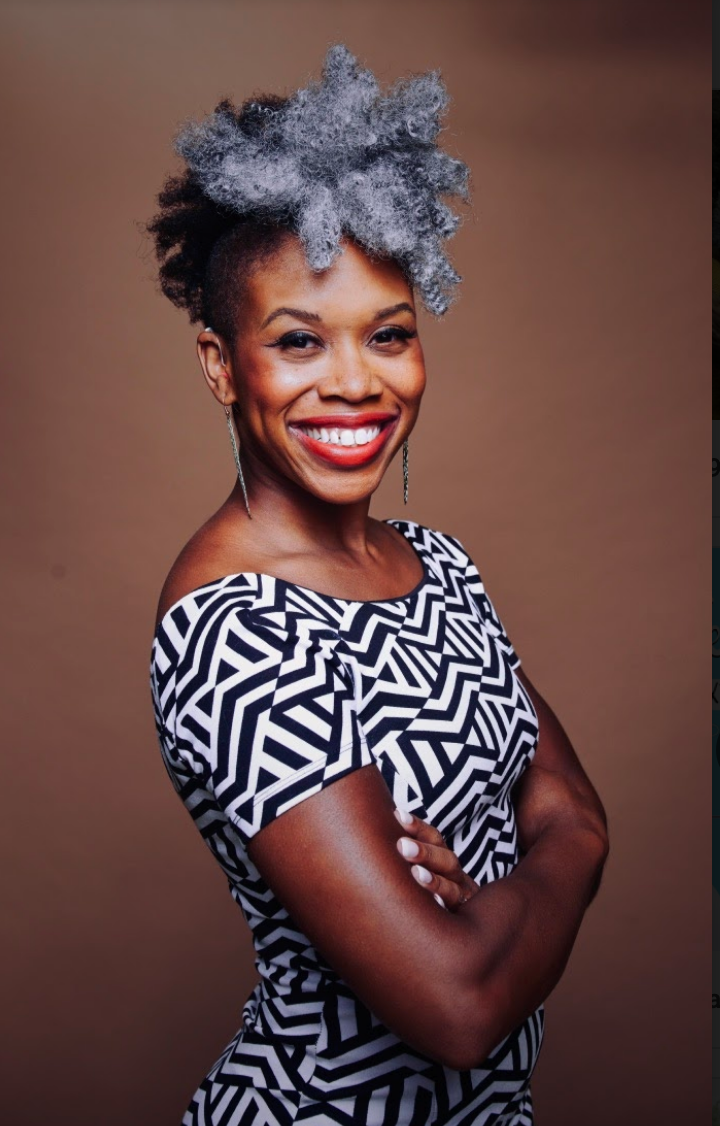
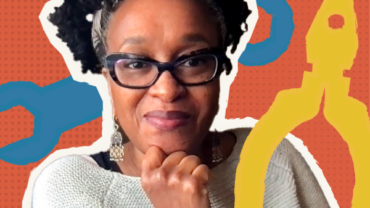
One night, earlier this month, I listened to the newest podcast in the series The Adoptee Next Door, hosted by Angela Tucker. Angela is a thought leader, writer and adoptee rights activist who advocates powerfully in support of transracially adopted people via lectures, teaching, counseling and a number of social media platforms. In the podcast, Angela was in conversation with Torie DiMartile, a fellow transracial adoptee and emerging scholar of the history of domestic adoption in the USA. You can watch/hear Angela and Torie’s conversation here.
I have been following Angela’s work for a few years and, in recent weeks, I’ve had some great email and phone exchanges with her. After listening, I sent this note to Angela. She has given me permission to share it.
“Hi Angela,
I stayed up late this evening listening to your newest podcast and I’m struck again by the way your experiences and insights open new perspectives on so many issues in our society. Especially matters of the conjunction of race and power in human relations (as in economic class, religion, nationality/citizenship, etc.).
Toward the end of the interview with Torie DiMartile you posed the question of how the birth parents of Amy Barrett’s Haitian-born children might be responding to her statements about how the children were “saved” and “improved” by Barrett’s adoption of them. You said you were thinking a great deal about the idea of “openness” in adoption – the matter of adoptive families embracing the birth families of their children in a full, genuine and dynamic way. And with daily interactions — not just occasional visits.
Do you know what I thought about when you said that? The issue of borders. Of citizenship. Of belonging. I was thinking about the way issues of “illegal immigration” and “transracial/international adoption” are, often, tightly interlaced. Both stem from US imperialism and the centuries-long exploitation of countries like Haiti, Guatemala, Mexico, and many parts of Asia and of the African continent. The neoliberal policies of the IMF, and of the US and European powers have decimated the economies and the sovereignty of many Latin American, Caribbean and African nations and have often created such horrific violence, both structural and physical, that people are not able to live, not able to constitute and maintain families, in the way they would if there was regular work and the social/mental/educational/economic/political supports of a strong, functioning civic society. And so they leave. Trying to get to a place that has not yet been destroyed/disabled/demeaned so that they can still make a life for themselves and their families. So that they can survive and even, hopefully, thrive. Or, they send their children away — either by choice or because they are put into a position where they feel they have no choice.
Of course, we can see similar dynamics inside the US in the case of African American communities decimated by rapid deindustrialiation in the 1970s; mass incarceration in the 1980s and 90s and continuing; gentrification nationwide from the 1980s onward; and years of structural neglect and plunder of Black people’s health, institutions and community resources (loss of schools and teachers, housing, civic organizations, Black banks, radio stations, media, and other businesses). I don’t have the statistics, but it wouldn’t surprise me to discover that as African American people have become more economically vulnerable and marginalized from the structures of civic, economic and political power in this country, since the late 1960s, the numbers of Black American children who are in foster care and being adopted has also grown.
Anyway, what I was getting to earlier, is the idea of borders and the notion of who is legitimate and illegitimate in a place (in a country, or a neighborhood, or a family). And the openness you are talking about, Angela, is, to my mind, a metaphor for the way in which “belonging” or “citizenship” or “legitimacy” becomes what the people with power in a situation say it is. What I mean is, these are really arbitrary and constructed concepts in US society. The walls and rules are adjusted for the purposes, by and large, of maintaining the power of a white (supremacist) economic elite. Kind of like race.
And the critique and alternative you speak of — i.e. EXPANDING the meaning of family beyond the nuclear family model — makes so much sense. And it’s an example of an indigenous frame of perception that can be a healing resource for a very contemporary societal challenge. It makes sense for the health and wellbeing of adoptees and, it seems to me, that it is also a necessary and useful model for our nation as we come to terms with the situation US foreign and domestic policies have created that exacerbates inequalities and violence “outside” of our borders. And, because of course, all of us are related to each other, ultimately, anyway — the foreign policies that reduce the life chances of people outside of the US are implicated in the growth of immigration to, and transnational/transracial adoptions in, the USA.
Okay, it’s getting late. Not sure how clear all of this is. But again, I so appreciate the way our conversations push my thinking in some different directions. It’s actually very helpful. Thanks!
Rachel”
Angela Tucker’s website is www.angelatucker.com
Her YouTube channel is The Adopted Life.


Leave us a reply